.png)


Green Cleaning Versus Conventional Cleaning
A freshly cleaned kitchen or office should smell clean, not leave you wondering what is lingering on the counters, floors, or in the air. When comparing green cleaning versus conventional cleaning, the real question is not whether one approach can remove dirt. Both can. It is how they achieve results, what they leave behind, and which choice fits the people and spaces you care for.
For Calgary-area households, property managers, and business owners, cleaning decisions often involve more than appearance. Children play on the floor. Pets lick their paws. Employees spend long hours indoors. Guests notice odors, residue, and dusty corners. A thoughtful cleaning plan considers all of it.
What separates green cleaning from conventional cleaning?
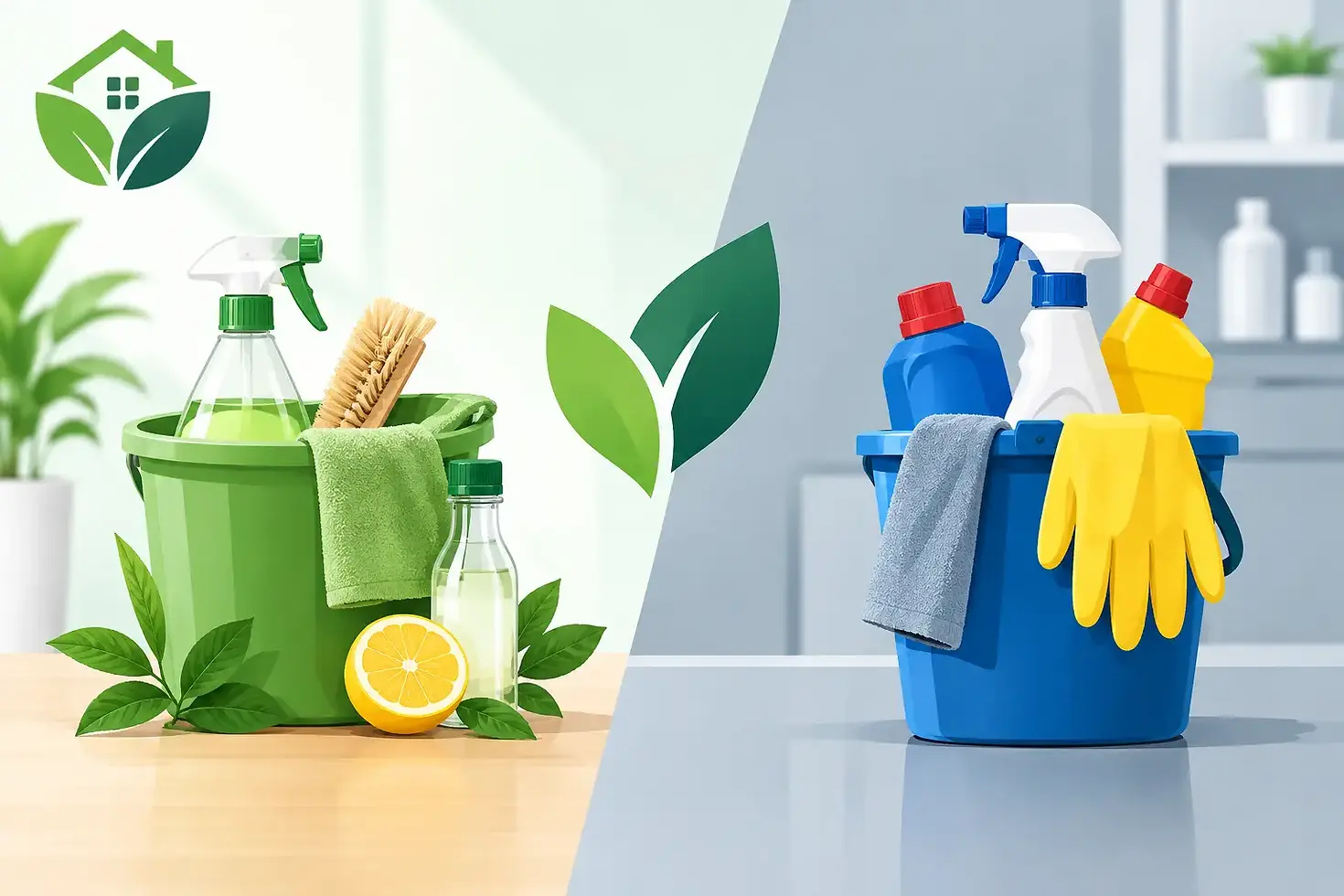
Conventional cleaning often relies on products formulated for fast, powerful results. These may include strong fragrances, solvents, bleach, ammonia, or other ingredients designed to cut grease, remove stains, or disinfect surfaces. Used correctly, these products can be effective, especially for specific sanitation tasks. However, some can produce harsh fumes, leave residues, or require careful storage and ventilation.
Green cleaning focuses on products and methods intended to reduce unnecessary exposure to harsh chemicals and lessen environmental impact. This can mean biodegradable formulas, lower-toxicity ingredients, plant-based surfactants, reusable tools, concentrated products that reduce packaging, and cleaning practices that conserve water where practical.
The word "green" alone is not a guarantee. Product claims vary, and a bottle with a leaf on the label is not automatically the best option. Responsible green cleaning means looking beyond marketing language to consider ingredient information, intended use, dilution instructions, fragrance, and performance on the surface being cleaned.
Green cleaning versus conventional cleaning: the practical differences
The biggest differences usually show up in indoor air, daily exposure, surface care, and waste. They can also affect the cleaning process itself.
Indoor air and fragrance
A strong scent is often associated with cleanliness, but fragrance is not proof that a surface is clean. Some conventional products release volatile compounds or fragrances that can be unpleasant for people who are sensitive to odors, have allergies, or simply prefer a neutral-smelling home or workplace.
Many green products are low-scented or fragrance-free. That does not mean every natural fragrance is suitable for every person, since essential oils and botanical ingredients can also bother sensitive individuals. The better approach is to choose products thoughtfully and communicate preferences before service begins.
Residue on everyday surfaces
Kitchen counters, bathroom fixtures, desks, high-touch doors, and floors receive frequent contact. Conventional products may leave residue if they are overapplied or not rinsed according to instructions. Green products can also leave streaks or film when used incorrectly, particularly on glass or glossy surfaces.
Good cleaning is not just about the formula. It depends on correct dilution, clean microfiber cloths, suitable tools, and trained technique. A properly used product at the right concentration is usually more effective than using extra product and hoping for a stronger result.
Performance on grease, grime, and tough buildup
This is where the conversation needs nuance. Green products can handle routine dust, soil, fingerprints, light grease, and everyday bathroom cleaning very well. For homes with pets, regular upkeep often prevents the kind of buildup that requires aggressive treatment in the first place.
For heavy oven grease, post-construction dust, mineral deposits, mold concerns, or a neglected move-out clean, the method may need to change. Dwell time, scrubbing tools, steam, HEPA vacuuming, and targeted specialty products can make a meaningful difference. In some situations, a stronger product may be appropriate when it is selected carefully, used safely, and applied only where needed.
Packaging and environmental impact
Conventional cleaning can create more chemical and packaging waste, particularly when products are purchased in many single-use spray bottles. Green practices aim to reduce that burden through concentrated solutions, reusable microfiber cloths, refill systems, and products designed to break down more responsibly.
Still, no cleaning approach has zero impact. Water use, transportation, laundry for reusable cloths, and product manufacturing all matter. The practical goal is not perfection. It is making safer, lower-waste choices without compromising the cleanliness and care a space requires.
Cleaning versus disinfecting: know when each matters
Cleaning removes visible soil, dust, grease, and many germs from a surface. Disinfecting uses a product designed to kill or deactivate specific microorganisms, typically after the surface has already been cleaned. The two jobs are related, but they are not interchangeable.
Most homes and offices benefit from consistent cleaning of high-touch areas, especially during cold and flu season or after someone has been ill. But disinfectant should not be used casually on every surface, every day. It must be appropriate for the material, used according to its label, and left on the surface for the required contact time.
For a workplace, child-focused space, rental turnover, or facility with particular sanitation expectations, discuss the level of service needed in advance. This helps ensure the cleaning plan matches the situation rather than relying on a one-size-fits-all routine.
Who benefits most from a green approach?
Green cleaning is often a strong fit for families with young children, pet owners, people sensitive to strong odors, and anyone who wants a healthier-feeling indoor environment. It also makes sense for offices, waiting rooms, community spaces, and rental properties where many different people share the same surfaces.
It can be especially useful for recurring service. Regular cleaning with non-toxic, environmentally responsible products helps maintain a consistently clean space without repeatedly introducing harsh smells or heavy residues. For busy households, that can mean coming home to a clean environment without needing to air out the rooms afterward.
For commercial decision-makers, green practices can support a professional experience for employees and visitors. A clean workplace should feel cared for, not smell like a chemical storage room.
How to choose the right cleaning service
Ask what products and methods a company uses, but also ask how it handles specific challenges. A dependable provider should be able to explain its approach to kitchens, bathrooms, floors, high-touch areas, pet concerns, post-construction dust, and specialty jobs such as ovens or BBQs.
Look for more than a product promise. Bonding, insurance, WCB coverage, trained staff, supervision, and quality inspections all contribute to a worry-free experience. Consistent results come from accountable people and clear processes, not from a label alone.
It also helps to share your priorities. Let the cleaning team know if you have fragrance sensitivities, pets, delicate finishes, young children, or areas that need extra attention. If you manage an office or community facility, clarify cleaning frequency, access procedures, and the high-traffic zones that shape visitors' first impressions.
A balanced choice for cleaner spaces
Green cleaning is not about accepting less effective results in exchange for better intentions. At its best, it combines capable products, careful technique, and practical judgment to keep homes and workplaces clean while being more considerate of people and the planet.
GreenCleanEx uses natural, non-toxic, sustainable products and HEPA vacuuming practices as part of a service model built for healthy, dependable cleaning. Whether you need recurring home care, a move-out clean, or reliable janitorial service, the right plan should fit your space, schedule, and comfort level.
A clean space should support daily life quietly: clearer air, cared-for surfaces, and one less responsibility on your list. Choose the approach that gives you confidence every time you walk through the door.

Comments